


Disclaimer:
The views expressed are my own and do not represent the official position of my employer or any organization I'm affiliated with.
Introduction
As AI systems become more embedded in clinical workflows, a quiet but fundamental shift is underway. These systems no longer sit behind the scenes, crunching numbers in black boxes. Instead, they surface at the point of care, suggesting diagnoses, flagging risks, even initiating clinical decisions.
We are not just designing for human users anymore. We are designing for interactions between humans and visible, judgment-expressing systems.
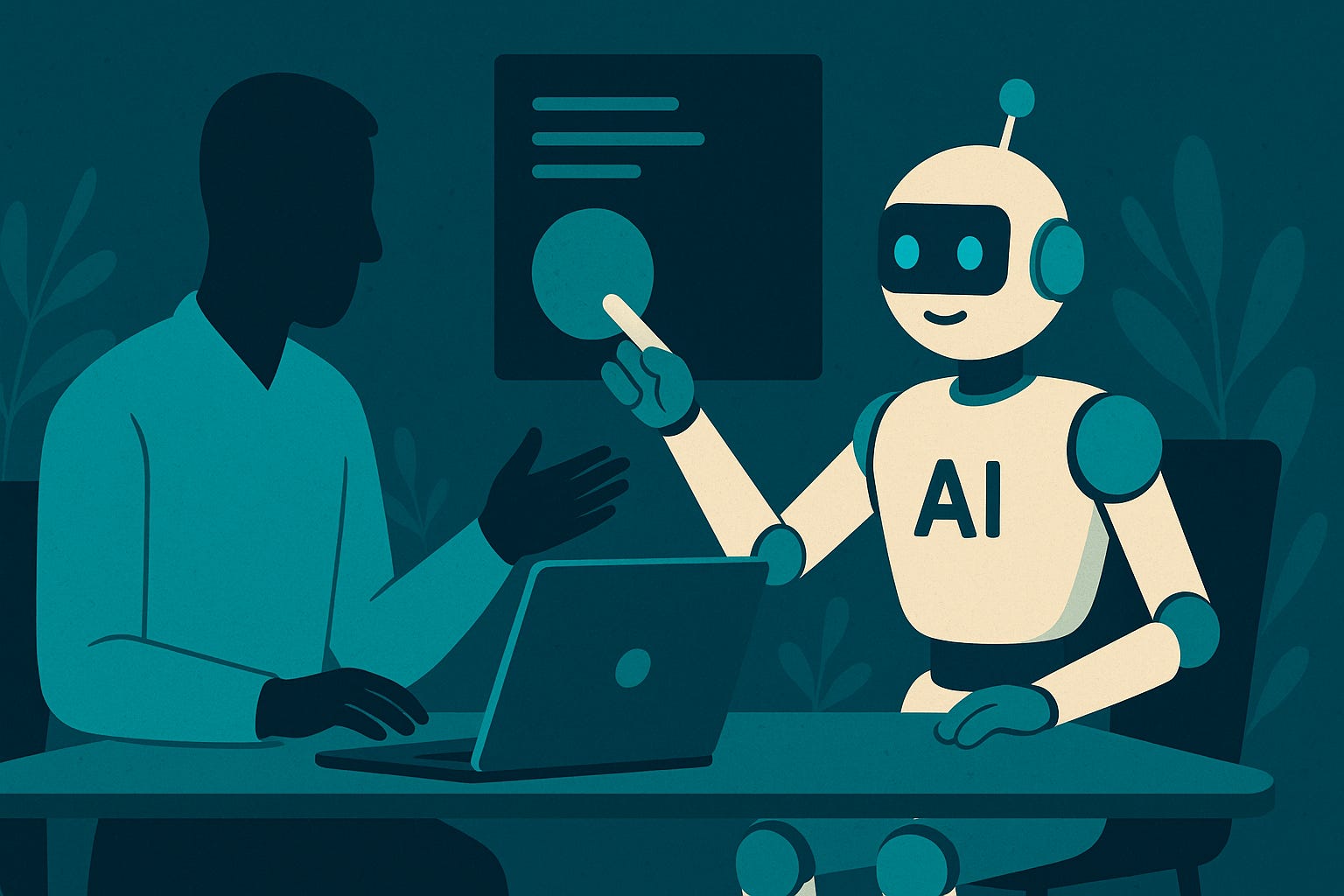
This shift demands a reevaluation of UX frameworks, especially personas. Traditional user personas help teams understand how people think and behave. But what about the AI itself? How it behaves shapes user response, especially in high-stakes environments like healthcare. Enter the concept of non-human AI personas, a structured, design-oriented way to make AI systems more understandable, predictable, and effective as partners.
The Problem with Human-Only Personas
Personas have long been a cornerstone of user-centered design. They encapsulate goals, pain points, workflows, and motivations. Whether designing for a nurse managing three post-op patients or an MSA clerk coordinating six different appointment types, human personas guide designers toward empathy and relevance.
But AI is a new kind of actor. It’s not a user. It’s not a stakeholder. Yet its presence influences the entire interaction model. Clinicians increasingly respond to AI the same way they do to colleagues: with interpretation, trust judgments, and skepticism.
We’re designing in a space where human users now ask:
“Why is the system recommending this?”
“Does this align with what I know about the patient?”
“How much confidence should I assign to this suggestion?”
“Is this behavior typical or is something wrong?”
This is not just technical interoperability. It’s interactional accountability. And it can’t be addressed by only designing better interfaces for human users. We must also design the behavior of the system.
