


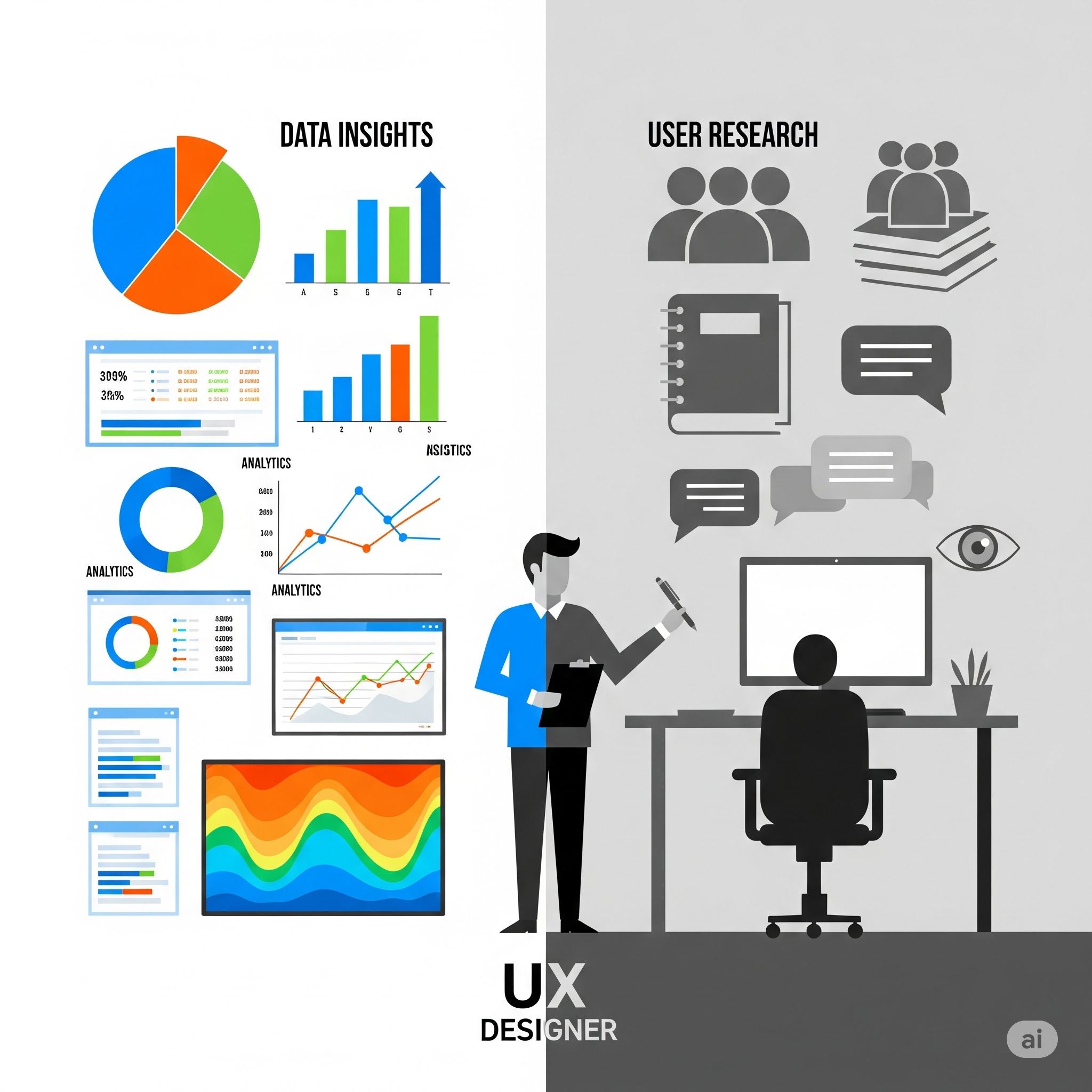
In the world of modern UX design, we've become addicted to data. Heat maps tell us where users hover. Funnel analytics reveal where they abandon ship. A/B tests determine which button color drives more conversions. But what happens when you work in environments where tracking user behavior isn't just difficult, it's forbidden?
This is the reality for thousands of UX professionals working in healthcare, government, financial services, and defense sectors. They operate in what I call "instrumentation deserts"; vast digital landscapes where privacy regulations, security protocols, and ethical considerations make traditional analytics impossible.
Welcome to the art of designing in the dark.
The Reality of Analytics-Free Environments
Consider the challenge of redesigning a mental health crisis intervention system. The natural instinct would be to ask: "Where do users drop off? What paths do they take?" But in this context, you can't track anything. These are people in crisis. Even knowing they visited could be too much data to ethically collect.
This hypothetical scenario illustrates a profound truth: some of the most important UX work happens in complete darkness.
When Microsoft Teams designed their healthcare platform, they couldn't simply port over their standard analytics suite. With stringent regulations like HIPAA in the U.S., UX designers must ensure that all designs comply with privacy laws and safeguard patient information effectively. Every design decision had to be made without the usual feedback loops that tech companies take for granted.
Similarly, when Médecins Sans Frontières rebuilt their Patent Opposition Database, the primary design challenge centered on creating an interface accessible to vastly different user groups, from civil society organizations to legal professionals. Traditional user tracking would have been both legally complex and ethically questionable given the sensitive nature of pharmaceutical patent challenges in developing nations.
These aren't edge cases. They represent a growing segment of UX work where the stakes are high, the users are vulnerable, and the data is locked away.
Why Traditional Metrics Disappear
The absence of analytics in these environments stems from several sources:
Regulatory Compliance
HIPAA requires explicit consent for any health data collection
FERPA protects educational records with similar stringency
FedRAMP and DoD IL5 standards create additional layers of security requirements
Technical Limitations
Legacy systems that predate modern telemetry capabilities
Air-gapped networks that physically prevent data transmission
Sandboxed environments where production data never reaches development teams
Ethical Considerations
Vulnerable populations who shouldn't be subjected to experimentation
High-stakes environments where A/B testing could literally cost lives
Trust relationships that would be damaged by perceived surveillance
